'Wonderfully atmospheric and full of believable characters. A really meaty crime novel' Ian Moore, author of “Death And Boules”
Travel to Italy and Algeria in these two brilliant, translated mysteries--NPR Fresh Air
“I've always loved mystery novels that take me inside different cultures. While lots of English language crime writers are good at evoking other lands — think of Philip Kerr's Nazi Berlin or Cara Black's Paris — the richest portraits come to us in translations of books by homegrown writers. These have the revelatory tang you get when novelists know their culture from the inside.
As it happens, two terrific novels of this kind have just come out from Bitter Lemon Press, a small London publisher that specializes in translated mysteries. These new books could hardly be less alike, except for one thing: Each is, in its unconventional way, quite brilliant.
The End of the Sahara is a kaleidoscopic murder mystery by the Algerian writer Saïd Khatibi, a rising star who just won the International Prize for Arabic Fiction. Superbly translated by Alexander E. Elinson, the book's set in a provincial city on the edge of the Sahara in 1988 Algeria, a troubled time when the ruling socialist government has clearly failed. But you don't need to know Algerian history to get sucked in by the plot, which centers on the murder of Zakia Zaghouani, a nightclub singer at a local hotel called The Sahara. Burning with urgency, the story is told by a big cast of characters who all speak to us in first person. There's Ibrahim, a college grad who's been reduced to dealing in illegal videos. There's the hotel owner, Maimoun, a shifty wheeler-dealer who fancied Zakia. There's Zakia's fiancé, Bachir, a decent guy found with blood on his shirt. He's the top suspect of Inspector Hamid, a corrupt, womanizing cop who also fancied Zakia. Bachir's represented by his cousin Noura, a good-hearted lawyer who's constantly derided for reaching the age of 30 without a husband. As we move from suspect to suspect, Khatibi not only makes us feel the textures of these characters' everyday lives — the looks and smells, the food shortages and emerging Islamist militancy — but he deftly unveils how they are all are trapped together in a spiderweb of lies and betrayal that began in the past. Using 1988 Algeria as a mirror for present-day Algeria, Khatibi gives us an X-ray of an entire social structure. Even as we learn who killed Zakia, we realize that no one escapes the bone-deep misogyny that underlies her murder and the repressive, post-colonial politics that leave Algerians spinning in circles. As one character thinks bitterly, "It was as if this country's history just repeats itself rather than moving forward…"
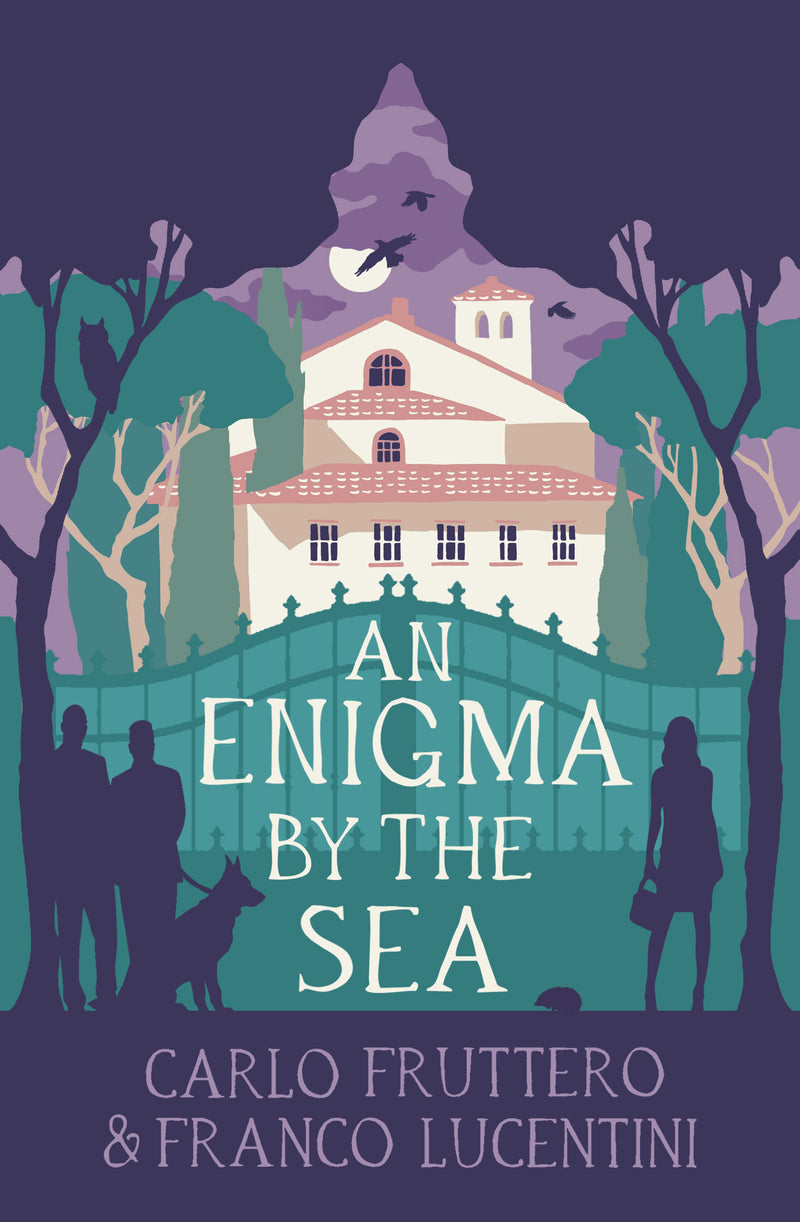
Deliciously translated by Gregory Dowling, An Enigma by the Sea starts off like a gently acerbic comedy of manners, as these self-absorbed characters go about killing time — chatting, flirting, bickering, having tea. Then suddenly the story shifts. Three residents inexplicably disappear. Could they have been murdered? Here? The question unleashes the sleuthing instincts of their neighbor, Signor Monforti, a pessimistic depressive who's a born detective: He spends his life scrutinizing every single thing for clues to impending disaster. Masters of the light fantastic, Fruttero and Lucentini roll out their mystery with the slyest of touches, weaving discussions of the Greek cynics and the nature of depression into their droll evocation of a gray, chilly off-season resort with its wind storms and dire pizzerias. If Khatibi shows us characters caught in the tragic flames of history, Fruttero and Lucentini look at human folly with a cool, almost ancient amusement at what strange, funny creatures we all are.” NPR Fresh Air-- John Powers
‘Following The Lover of No Fixed Abode and Runaway Horses, An Enigma by the Sea (2026, £10.99), is the third novel by Carlo Fruttero and Franco Lucentini to be published by the excellent Bitter Lemon Press, although an English translation of this 1991 work was first published in 1994. This handsome paperback is very welcome. Set in the Gualdana, a villa-stretch of the Tyrrhenian coastline in the gloomy chill and darkness of winter, this is an account of an Italy of extraordinary individuals facing a growing reality of perturbation slipping into paranoia. Murder does not occur until well into the novel, by when a dystopia is well to the fore, one in which depression is commonplace and society held up to be dysfunctional, although the Carabinieri receive praise.’---The Critic
The coast of Tuscany in winter as depicted by these skilled authors is a far cry from its louche high season. Now, hidden in the pines we find a gated community of wealthy residents and occasional vacationers preparing for the Christmas festivities. In keeping with an ambience of discreet sophistication everything starts slow, mannered, courteous. The retired musician frets over his proposed performance of Bach; a small boy is lost, and found unharmed; a Minister arrives to find rats in his villa, owls in the roof. But help is at hand.
The small community is serviced by a sizeable village and a host of servants, handymen and police; the cast is huge and Italian and a cast list is welcome. It includes the animals, from police dogs and a quartet of Gordon setters to those owls and rats and a porcupine, all portrayed without a whiff of sentiment.
Witty and erudite rather than funny this is a deeply perceptive novel, epitomized by Monforti, a recovering depressive whose jumbled brain slowly clicks into place as he observes the lives of his neighbours and the bumbling but well-meaning police, while all the time he is cheered and sustained by Natalia, the gorgeous single mother with whom he is hopelessly in love.
What starts as a comedy of manners is slowly stripped of its protective skins to become a novel of obsession. Monforti’s counterpart is Ugo, a vagabond philosopher in thrall to others of his kind in Ancient Greece; conversely an elderly lady is ruled by the Tarot cards (but her readings queried by her earthy Filipino maid). True, some foibles are merely subjects for derisive gossip, like the MP being convinced that it’s his Parliamentary rival who is responsible for the infestation of rats in his villa, or the gardener fuming with rage at the plumber who is having an affair with his wife. Never forgetting the two celebrated comedians who can find nothing funny. But to the victims nothing is funny. Christmas looms and nerves stretch.
This is a hotchpotch of ostensibly innocuous situations, of smouldering embers; not dramas as yet but needing a twitch, an instance: anything to make a connection. It comes in the form of a telescope: a Christmas gift to Natalia’s precocious son, but even more significant was a moment that preceded it when a porcupine crossed the road just as the Count was sneaking past the gate with a ravishing model to spend the night in his wife’s empty villa.
There is a storm; three people disappear, one comes back with the tide, bludgeoned by rocks or human hands or both. All the dogs come into play as trackers: the four Gordon setters, the police dogs. Monforti is a suspect. Hauled in for questioning he expounds the denouement with elegance and no hint of contrivance. The eponymous enigma was a puzzle which he likens to a gift from Natalia: a large jigsaw without the picture, and he has solved it according to the dictates of his scrambled brain, unscrambling and reassembling himself in the process.
This is an enchanting novel: a collaboration enhanced by the empathy and expertise of its translator, Gregory Dowling.----SHOTS Magazine
“A series of unfortunate events rocks a coastal Italian village.. Fruttero and Lucentini’s third mystery, originally published in Italy 35 years ago, dives into the everyday concerns and quirks of the residents of the idyllic Gualdana, on the Tyrrhenian Sea. The omniscient narrator has an arch, gossipy voice more reminiscent of Austen or Trollope than Hammett or even Christie, with a mildly simmering plot to match. Not that the anecdotes sprinkled throughout are cozy. Like the story of Signor Lopez disemboweled by a boar, they often run to the macabre. There are dozens of characters and nearly as many plot threads, elaborately described in an appendix and in an early footnote that offers a preview of the pleasantly discursive storytelling. The first major event is the disappearance of young Brit Colin Graham, whose family vacations annually in Tuscany. A bit of community panic and a search follows before he’s eventually found unharmed. Readers will need to wait well over a hundred pages for the next cataclysmic event, a car crash. In between, there’s an invasion of mice, a scourge of rats, and a damaging den of porcupines. Not long after the car crash, one of the angry drivers washes ashore. An investigation, such as it is, follows, led by Lieutenant-Colonel Papi and his team of carabinieri. A juicily acerbic mystery that’s more lurid soap opera than whodunit. ----Kirkus Reviews
“In this well-plotted thriller by Italian duo Fruttero and Lucentini, translated into English for the first time, a private seaside idyll for the wealthy and reclusive becomes the scene of a shocking crime. As baffled local police bumble around the beach community, it’s up to one of the glamorous villa-dwellers to take up the mantle of detective and uncover all his neighbors’ many secrets. Featuring a quirky ensemble cast and an erudite amateur detective, this charming tale is sure to please a wide variety of readers.”---CrimeReads